


The capsule wardrobe promised to simplify everything. So why does your closet still feel impossible?
Here is the truth: a capsule wardrobe is not a shopping list. It is a system. The reason most women still feel stuck, even after reading every guide and buying all the recommended pieces, is that no one has explained what the system actually is.
The system is this: invest in the pieces you wear every single week, and rent everything else. Not because renting is a trend. Because ownership was never the goal. Getting dressed effortlessly, every morning, for every version of your life is the goal.
This is the guide we wished existed.
In this article
- What a capsule wardrobe actually is
- Why most capsule wardrobe guides set you up to fail
- The part they all leave out
- What to own vs. what to rent
- How to build your wardrobe system in 4 steps
- Frequently asked questions

What Is a Capsule Wardrobe, Really?
A capsule wardrobe is a small, curated collection of clothing that works together, covers your real life, and does not need constant replacing. The concept was first named by Susie Faux, a London boutique owner, in the 1970s. Donna Karan brought it to wider attention in 1985 with her Seven Easy Pieces collection. The core idea has not changed in fifty years: fewer pieces, more versatility, less decision fatigue.
What it is not: a specific number, a mandatory color palette, or a reason to spend a Saturday afternoon filling a cart online. There is no universal list of 37 items that works for every woman. The woman flying to New York for a board meeting on Monday and a fundraiser gala on Friday has different requirements than the woman doing school pickups and client coffees on the same day. Both of them need a system. Neither of them needs the same list.
Why Does Every Capsule Wardrobe Guide Feel Impossible to Follow?
Because almost every one of them is, at its core, a shopping guide dressed up as wardrobe advice.
Read enough of them and the pattern becomes clear. There is an opening paragraph about simplicity, a numbered list of pieces, and then a row of shoppable links. The implication: buy these 12 specific items and clarity will follow. It rarely does.
The problem is not the pieces. The problem is that a closet full of right items purchased for someone else's life still feels like the wrong wardrobe. You cannot buy your way into a system. The system comes first.
There is a second problem the lists never address: your life changes. The wardrobe you built for your pre-children schedule does not work for the school year. The edit you curated for Atlanta winters does not travel well to New York in February. A fixed collection of owned pieces cannot flex with a dynamic life. And yet every guide assumes it can.
What Do Most Capsule Wardrobe Guides Leave Out?
Rotation.
A genuinely functional wardrobe has two layers.
The first is the foundation: pieces you reach for every single week, regardless of season or occasion. A tailored trouser. A white shirt you trust. Denim that fits well enough to wear three days running. These pieces are worth owning. Invest in them accordingly.
The second layer is where most women spend the most money and get the least return. Seasonal pieces. Event dressing. The blazer for one specific trip. The dress for the rehearsal dinner. The statement coat worn four times before the trend moved on. These pieces are not worth owning. They are worth renting.
This is not an argument for minimalism for its own sake. It is a case for clarity. When your closet contains only what earns its place every week, getting dressed stops being a decision and starts being a routine. The rest of your wardrobe, the pieces that rotate with your calendar, can be curated fresh each month, returned when you are done, and replaced without guilt or accumulation.
That is the system. That is what a capsule wardrobe was always meant to be.
At The Maison Marie, your stylist builds the rental half of that system for you. Each month, your edit is curated around your life, your upcoming calendar, and the pieces already in your closet. You wear what you love. You return what is done. You refresh when you are ready.
Choose the membership that fits your life.

What Should You Own vs. What Should You Rent?
A useful rule: if you would reach for a piece more than four times in a month, it belongs in your own wardrobe. Fewer than four times, or only for a specific type of occasion, it is a stronger candidate for renting.
Worth owning:
- A well-fitting pair of tailored trousers in a neutral (navy, camel, or black)
- Quality denim in a cut that works across your week
- One or two shirts or tops you trust completely
- A coat you will wear across at least three seasons
- Shoes and boots you reach for most weeks
Worth renting:
- Event dresses and occasion wear
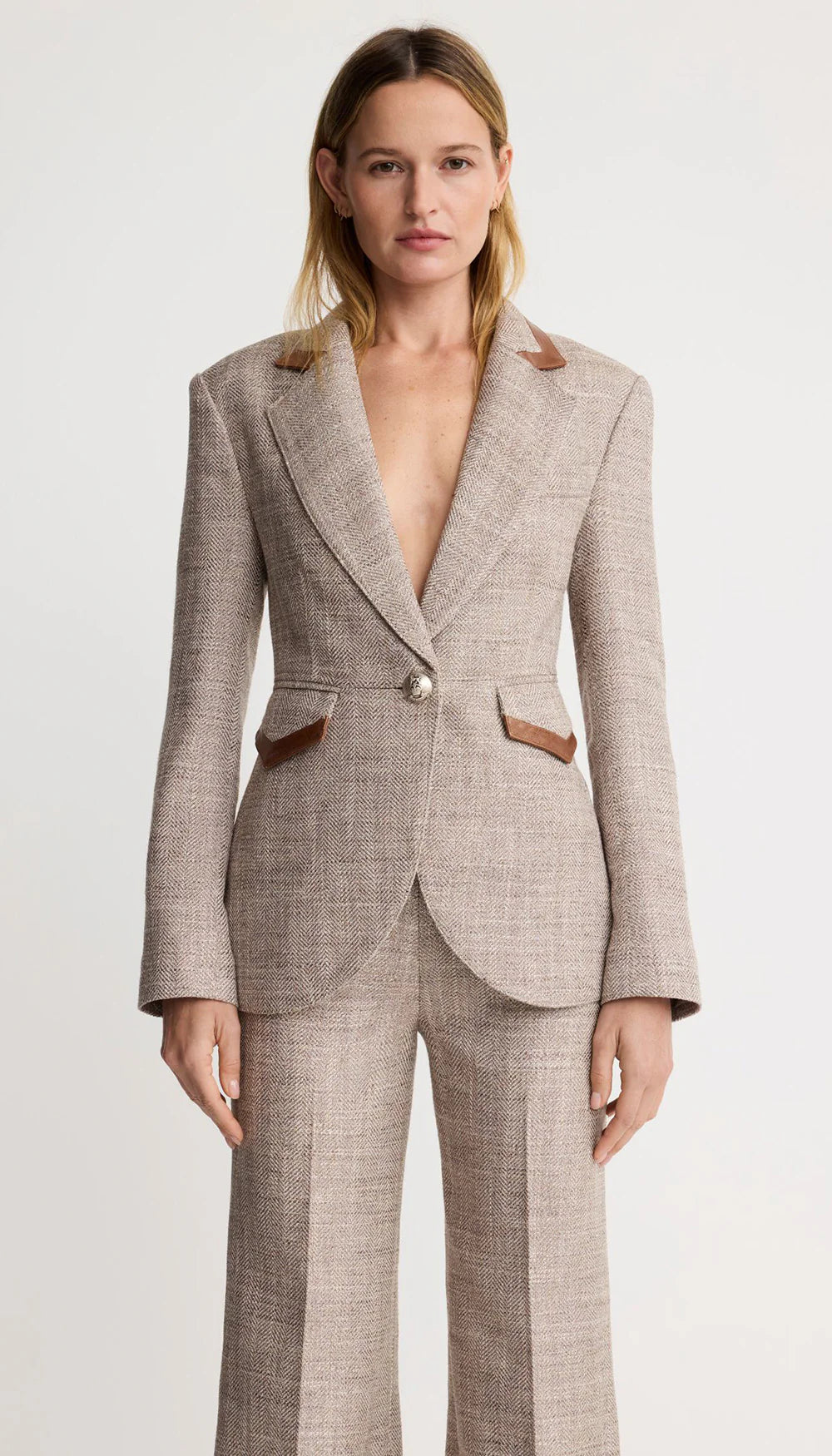
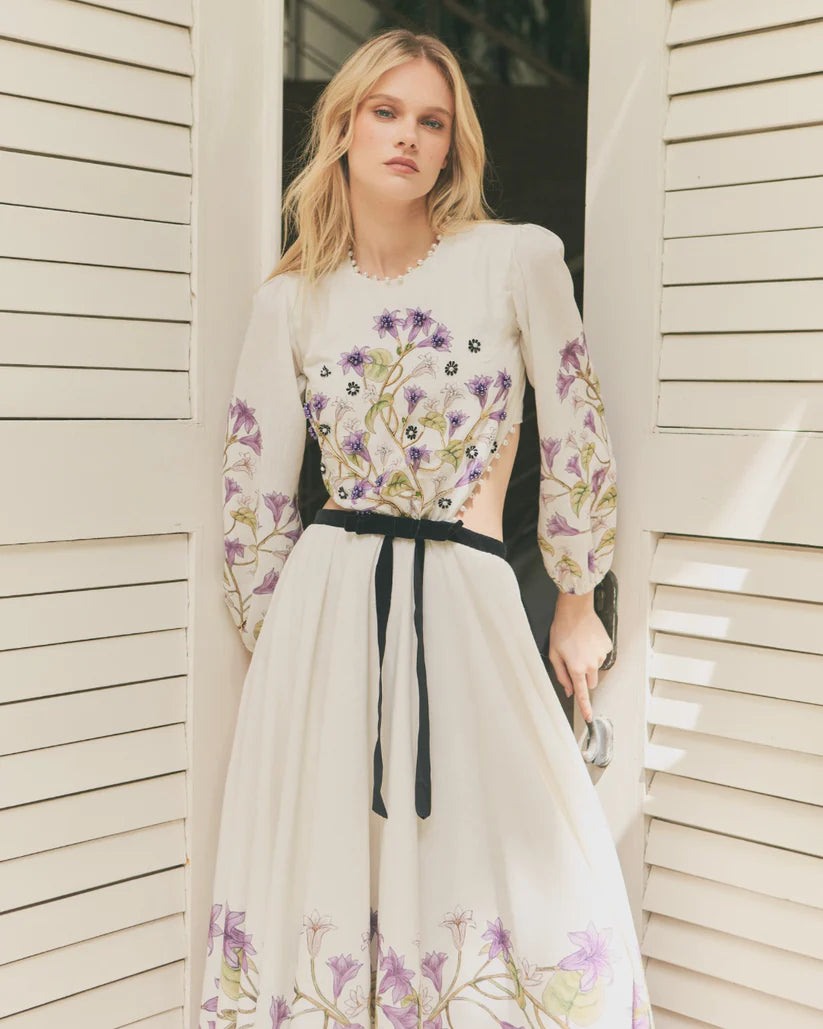
- Seasonal statement pieces: a linen suit for summer, a velvet blazer for the holidays
- Trend-driven items you love now but will not need in two years
- Investment-brand pieces you want to try before committing: the Smythe blazer, the Lanhtropy linen set, the Et Ochs piece you have been considering
- Anything requiring dry-cleaning you would rather not manage yourself
There is nothing lesser about the rent column. It is, in fact, where the most interesting dressing happens. It is where you try new things without the weight of ownership attached.

How Do You Actually Build a Wardrobe System?
Step 1: Do the audit first.
Before you buy or rent anything, pull everything out. Sort into three categories: wears weekly, wears occasionally, has not been worn in six months. The first category is your foundation. The third is clutter. The second is your rental territory.
Step 2: Invest in the essentials that are missing.
If your weekly-wear category has gaps, fill them. This is the spending worth doing. Buy once, buy well, and buy for the life you are actually living, not the version you are planning for.
Step 3: Rent the rest.
Build the rotating layer of your wardrobe through membership, not accumulation. A monthly edit means your wardrobe moves with your calendar without growing larger each season.
Step 4: Refresh, not accumulate.
The goal is a wardrobe that stays approximately the same size while becoming more relevant to your life each month. Each return is a decision already made. Each new edit is the next step forward.
If you are not sure where to start, our stylists offer a free 15-minute intro session to talk through your wardrobe, your life, and which membership makes sense for you.
Frequently Asked Questions
How many pieces should a capsule wardrobe have?
There is no fixed number. The most commonly cited range is 25 to 50 pieces, but the number matters less than the question: does every piece in my closet work with at least three others, and do I actually wear it? Start from that question, not from a target count.
What is the difference between a capsule wardrobe and a minimalist wardrobe?
Minimalism is about reducing the quantity of what you own. A capsule wardrobe is about the quality of how the pieces work together. You can have a 70-piece capsule wardrobe if every piece has a clear purpose and earns its place. You can have 20 pieces that still feel chaotic if they do not work as a system.
Is a capsule wardrobe worth it?
Yes, but only if you approach it as a system rather than a shopping project. The value is not in having fewer pieces. It is in reducing the daily decision load, increasing cost-per-wear on everything you own, and getting back the cognitive bandwidth the overfull closet has been quietly taking.
What if my life requires clothing for very different occasions?
This is precisely why rotation matters. A woman with a full calendar (workweek, weekends, travel, events) cannot cover every context with a single static wardrobe. The answer is a reliable owned foundation and a rotating rental layer that flexes with your month.
Do I have to own all the pieces in a capsule wardrobe?
No. Ownership is the right choice for pieces you wear every week. For the rest, renting is the smarter answer for your closet, your budget, and the amount of mental energy you want to spend on getting dressed each morning.
Ready to build the system?
Your stylist will handle the rental half. You invest in the essentials. We take care of everything else.
Explore Membership →Not sure which plan fits? Book a free 15-minute intro session.